

Intuitive Creation: Trusting Your Creative Instincts
Unleashing the Raw Power of Your Inner Creative Compass

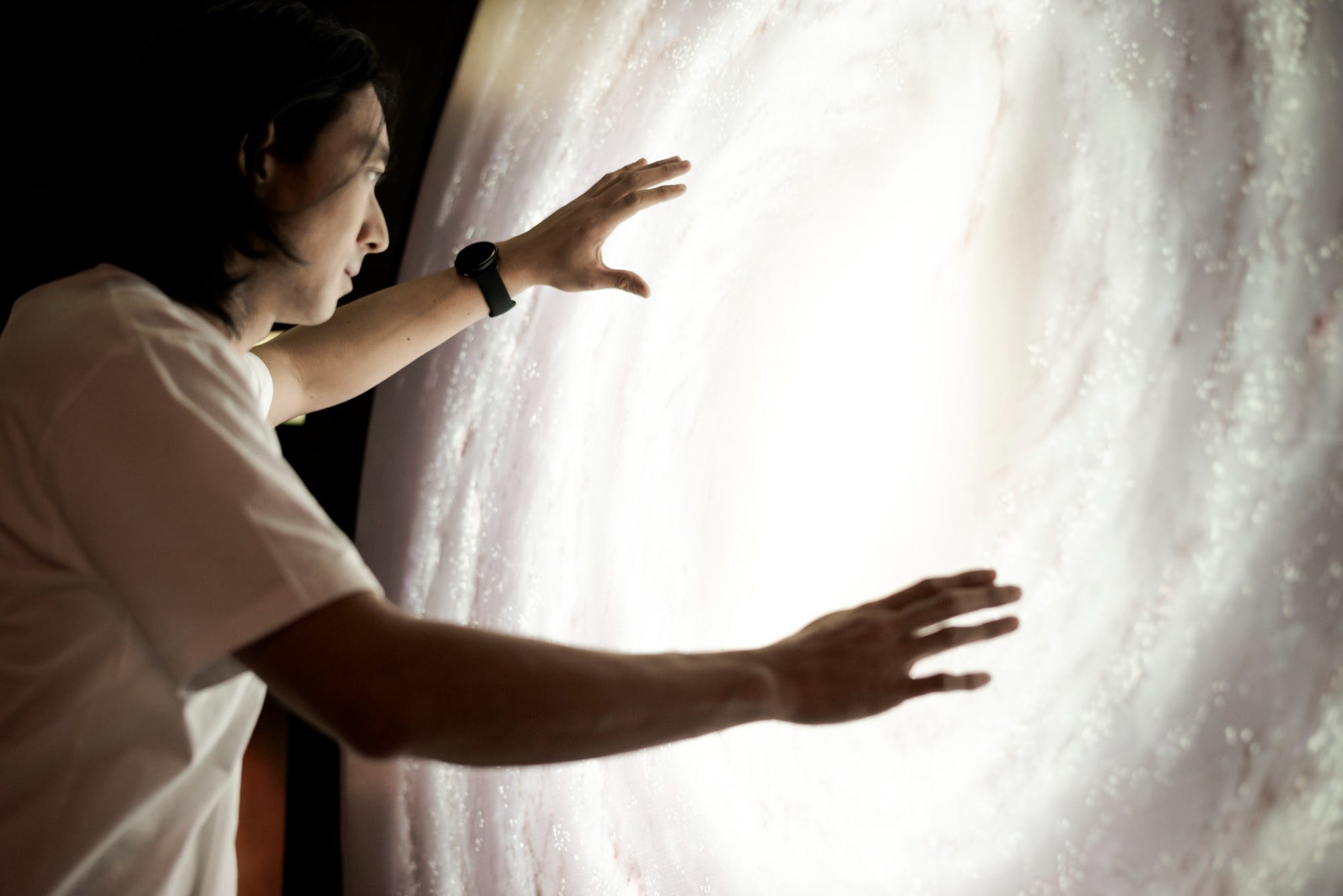
The spark hits. Your hand moves across the canvas before your mind can catch up. The melody flows from your fingertips as if channeled from some cosmic frequency. Words pour onto the page with an urgency that surprises even you. In these electric moments, you're not thinking—you're creating. You've tapped into something profound: your creative intuition.
But then doubt creeps in. "Was that good enough? Should I have planned more? What will people think?" The rational mind steps forward, armed with rules, expectations, and the crushing weight of perfectionism. Suddenly, that pure creative flow feels like a distant memory.
Welcome to the eternal dance between intuition and intellect—and the revolutionary act of learning to trust your creative instincts.
The Electromagnetic Field of Creative Intuition
Your creative intuition isn't mystical mumbo-jumbo—it's a sophisticated neural network firing at lightning speed, processing millions of micro-observations, memories, and sensations that your conscious mind couldn't possibly track. It's your creative subconscious working overtime, connecting dots you didn't even know existed.
Think of it as your personal creative GPS, constantly recalculating the route to authentic expression based on real-time input from your entire being: your experiences, emotions, cultural background, physical sensations, and that indefinable something that makes you you.
Neuroscientists call it the "default mode network"—the brain's screensaver that activates during rest, daydreaming, and those precious moments when we're not actively trying to control our thoughts. This is where the magic happens. Where connections form. Where breakthrough ideas are born.
The Global Symphony of Intuitive Creation
Across cultures and centuries, the most groundbreaking artists have been those brave enough to trust their inner compass:
Japanese concept of "Wabi-Sabi" teaches us to find beauty in imperfection and impermanence—essentially trusting that our first, flawed instincts contain profound truth.
Aboriginal Australian "Dreamtime" stories emerge from deep intuitive connection to land and spirit, created through spontaneous storytelling that channels ancestral wisdom.
Jazz musicians in smoky clubs worldwide know this feeling intimately—the moment when the written music disappears and pure musical conversation takes over, each player responding intuitively to the collective sound.
Indigenous weavers from Guatemala to Ghana work with patterns that flow through their hands from generations of inherited knowledge, each piece unique because it emerges from the maker's individual creative spirit.
This isn't coincidence. It's evidence of a universal human capacity to create authentically when we silence the noise and trust our inner knowing.

Breaking Through the Walls: Why We Doubt Our Creative Instincts
The Education Trap: Most of us learned to create within boxes. Color inside the lines. Follow the format. Write the five-paragraph essay. While structure has its place, it can calcify into creative paralysis.
The Comparison Game: Social media has turned creativity into a competitive sport. We see others' highlight reels and judge our behind-the-scenes struggles, forgetting that authentic creativity isn't about winning—it's about truth-telling.
The Perfectionism Prison: We've been conditioned to believe that good work requires suffering, multiple drafts, and exhaustive planning. While craft matters tremendously, the seeds of great work often come from those unguarded moments of pure instinct.
Cultural Conditioning: Depending on your background, you might have learned that creativity is frivolous, that real work requires logical thinking, or that artistic expression is reserved for the "talented few." These limiting beliefs create static in your intuitive radio.
Fear of Judgment: The vulnerable act of creating from instinct feels risky because it reveals who we really are. What if our authentic voice isn't good enough? What if people don't understand? What if we fail?
The Revolutionary Practice: How to Reclaim Your Creative Instincts
1. Create Sacred Speed
Set a timer for 15 minutes. Choose your medium—paint, words, clay, movement, sound—and create without stopping. No editing, no second-guessing, no deleting. This trains your system to value flow over perfection and strengthens your trust in first impulses.
2. The "Yes, And" Approach
Borrowed from improv theater, this practice means accepting whatever emerges without judgment and building on it. That weird color choice? Yes, and what if we make it even weirder? That unexpected lyric? Yes, and what story does it want to tell?
3. Body Wisdom Check-Ins
Before creating, scan your body. What sensations are present? What emotions are moving through you? What wants to be expressed? Your body holds creative intelligence that your mind often overlooks.
4. The Morning Pages Revolution
Julia Cameron's practice of writing three pages of stream-of-consciousness every morning isn't just for writers. It's mental composting—clearing the mental clutter so your creative instincts have space to breathe.
5. Environmental Intuition
Notice how different environments affect your creative flow. Maybe you write better in cafes but paint better in silence. Maybe you choreograph better outdoors but compose better in small spaces. Honor these instincts instead of fighting them.
6. Collaborative Intuition
Find other creators who value instinct over ego. Create together without predetermined outcomes. Notice how your intuition responds to and builds on others' creative energy.
The Science Behind the Magic
Neuroplasticity research shows that creative practice literally rewires our brains, strengthening neural pathways associated with divergent thinking and pattern recognition. Each time you trust an instinct and create from that place, you're building creative confidence at a cellular level.
Flow state studies reveal that our most satisfying and effective creative work happens when we're fully absorbed, when self-consciousness disappears, and when our skills meet the challenge at just the right level. This is intuitive creation in action.
Embodied cognition research proves that our bodies influence our thinking more than we realize. The way you sit, breathe, and move directly impacts your creative access. Your instincts include somatic wisdom.
Practical Alchemy: Transforming Doubt into Creative Fuel
Reframe Mistakes as Information
Every "mistake" in intuitive creation is actually data about your authentic creative signature. That painting that went in an unexpected direction? It's showing you something about your aesthetic instincts. That song that doesn't fit any genre? It's revealing your unique musical DNA.
Create Ritual Around Instinct
Develop pre-creation rituals that signal to your nervous system that it's safe to create intuitively. Light a candle, play specific music, arrange your tools in a certain way. These rituals become anchors for accessing your creative flow state.
Document Instinct Wins
Keep a "creative instinct journal" where you record times when following your gut led to breakthrough work. Build evidence that your instincts are trustworthy guides, not reckless impulses.
Practice the Pause
When the urge to edit, judge, or "fix" arises mid-creation, pause. Take three breaths. Ask: "What is this impulse trying to protect me from?" Often, it's trying to protect you from vulnerability—the very thing that makes art alive.
Cross-Pollination: Intuitive Creation Across Disciplines
Visual Artists: Trust your first color choice. Notice which shapes your hand wants to make before your mind decides what you're drawing. Pay attention to the paintings that surprise you—they're often your most authentic work.
Writers: Follow the tangents. When your characters want to say something unexpected, let them speak. When a scene wants to go in a different direction than your outline, consider going with it. Your subconscious storyteller often knows things your conscious plotter doesn't.
Musicians: Jam with yourself regularly. Play without a goal. Sing nonsense syllables until real lyrics emerge. Notice which chord progressions make your body move—that's your musical instinct speaking.
Dancers/Movement Artists: Put on music you've never heard before and let your body respond without choreographing. Pay attention to which movements feel authentic versus which ones you think look good.
Makers/Crafters: Let materials guide you. Pick up clay without deciding what to make. Start with one element and see what it wants to become. Honor the wisdom of your hands.
Digital Creators: Set constraints that force instinctive choices. Use random generators. Create with unfamiliar software. Break your own rules regularly.
The Cultural Revolution: Intuitive Creation as Resistance
In a world obsessed with metrics, algorithms, and market research, creating from instinct is a radical act. It's choosing authenticity over approval, process over product, truth over trend.
It's indigenous wisdom in a colonized creative landscape. It's feminine receptivity in a masculine productivity culture. It's childlike wonder in an adulting-obsessed world. It's human creativity in an AI-augmented future.
When you create from instinct, you're not just making art—you're preserving the irreplaceable essence of human creative expression. You're contributing your unique frequency to the grand symphony of global creativity.
Advanced Practices for Seasoned Creators
Cross-Medium Intuition
If you're a writer, try expressing your current project through paint or dance first. If you're a visual artist, try writing or singing your painting before you create it. These translation exercises reveal intuitive insights your primary medium might miss.
Seasonal Intuitive Creation
Notice how your creative instincts shift with natural cycles. Maybe your winter creations are more introspective, your summer works more explosive. Honor these rhythms instead of forcing consistency.
Collaborative Intuition Challenges
Create with strangers. Join or start groups where people create together without talking first. Notice how your instincts respond to completely unfamiliar creative energies.
Technology as Intuitive Partner
Use AI tools not to replace your instincts but to dialogue with them. Let algorithmic suggestions spark intuitive responses. Create in conversation with technology rather than in competition with it.
The Ripple Effect: When You Trust Your Creative Instincts
Something extraordinary happens when you consistently honor your creative instincts. Your work becomes more distinctive, more alive, more necessary. But the transformation goes beyond your art:
Your decision-making in all areas improves because you've strengthened your trust in inner wisdom.
Your relationships deepen because you're modeling authenticity and courage.
Your problem-solving becomes more innovative because you've trained yourself to see unexpected connections.
Your life becomes more satisfying because you're operating from your truth rather than external expectations.
You inspire others to trust their own creative instincts, creating ripples of authenticity in an increasingly artificial world.
The Daily Revolution: Making Intuitive Creation a Way of Life
Morning Instinct Check: Before looking at your phone, ask yourself: "What wants to be created today?" Listen for the first response, not the "reasonable" one.
Micro-Creations: Throughout the day, make tiny creative choices from instinct. How you arrange items on your desk, which route you take walking, how you phrase an email—all opportunities to practice trusting your creative compass.
Evening Reflection: Before sleep, recall one moment when you followed a creative instinct that day. Celebrate it, regardless of the outcome.
Weekly Wild Cards: Once a week, do something creatively impulsive. Take a class in something completely unfamiliar, make art with unusual materials, write in a genre you've never tried.
Monthly Creative Dates: Schedule regular solo time for pure creative play with no agenda beyond following instinctive curiosity.
The Call to Creative Courage
Your creative instincts are not random impulses—they're the distilled wisdom of your entire being, refined by your unique experience and perspective. They're your contribution to the eternal human conversation about beauty, truth, connection, and meaning.
The world doesn't need another technically perfect but soulless creation. It needs your authentic voice, with all its weird beauty, cultural specificity, and fearless vulnerability.
Trust the whisper that says "try this." Trust the urge to break your own rules. Trust the vision that makes no logical sense but feels absolutely right. Trust the creative instinct that chose you as its vehicle.
In a universe of infinite creative possibilities, your instincts are your cosmic coordinates. They're guiding you toward the work only you can make, the stories only you can tell, the beauty only you can reveal.
The question isn't whether your creative instincts are trustworthy—they are.
The question is: Will you be brave enough to follow where they lead?
Your Creative Instinct Manifesto
I trust the first impulse. I honor the unexpected direction. I value authenticity over approval. I create from my truth, not my fears. I am my own creative compass. My instincts are wisdom in action. I trust the process, even when I can't see the destination. My creativity is my gift to the world. I am brave enough to create from my most authentic self.
Preorder Eric Maisel’s Brave New Mind
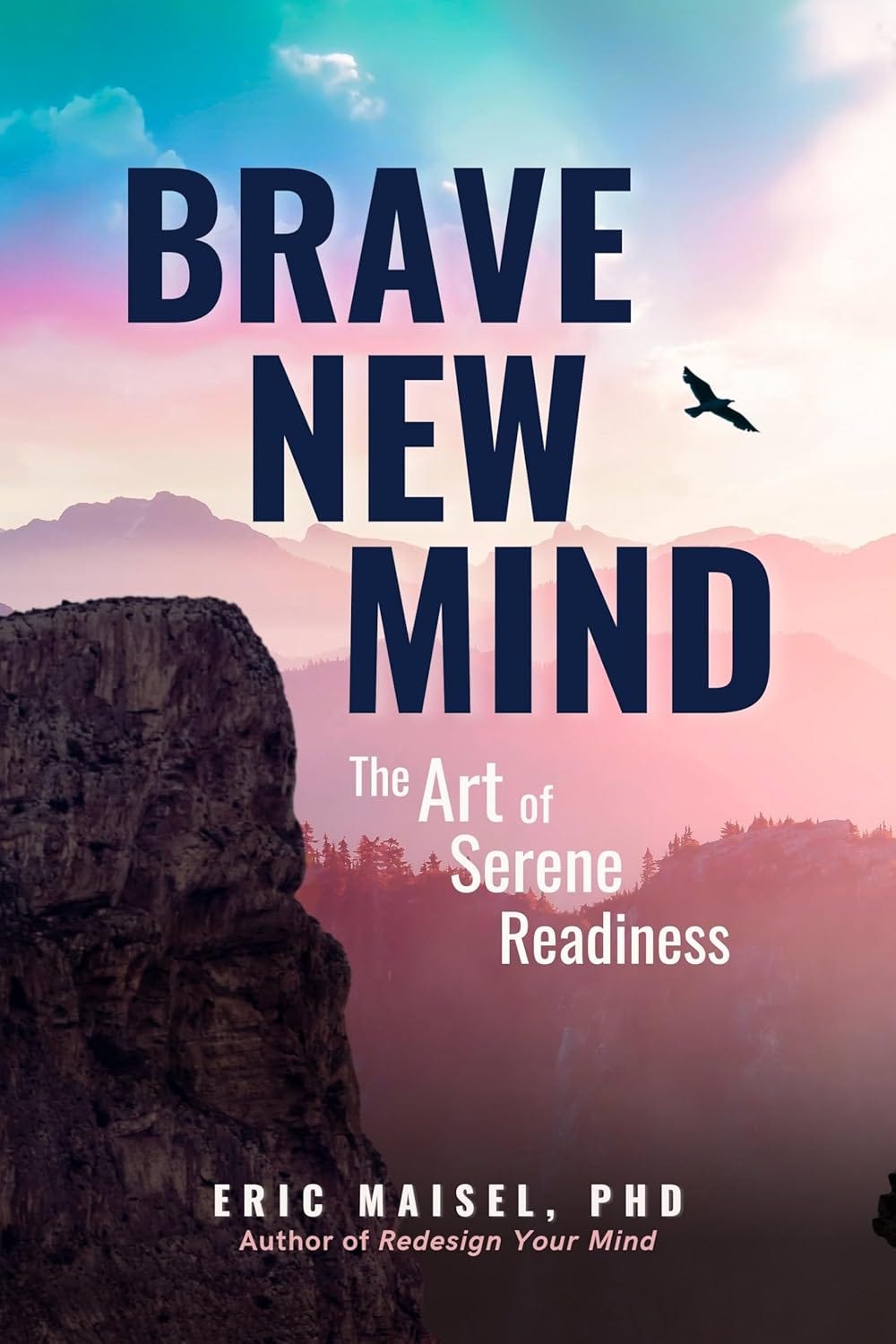
Get these wonderful gifts for preordering Brave New Mind!
Just preorder your copy (at any one of the following locations) and then grab your gift. It’s all on the honor system. Preorder, select, and enjoy!